Tesla 4680 cells and bad journalism

Tesla and Pansonic have introduced the new 4680 battery cell that future battery packs for the Model Y and the Cybertruck will be based on. These larger cells will replace the previous 2170 form factor that current Tesla packs are based on, which in turn replaced the 18650 cells that Tesla inherited from the laptop industry.

Some of the articles about the new cell have talked about the 5 times higher capacity of the cells saying it would address the problem of “range anxiety”:

5 times more energy means less range anxiety and more drive time. It means fewer stops on a road trip and a more enjoyable experience.
(Why The Tesla Tabless Battery Is So Good, torquenews.com, 2021-03-30)

Actually, this claim is embarassingly disingenuous.

Yes, the new cells have higher capacity but that’s because they’re bigger, which means a battery pack of a given capacity will be built from fewer but larger cells. The bottom line of capacity by weight or by volume is largely unchanged.

The new cells are 2.2 times the diameter of their predecessors, meaning they will have a cross section 4.8 times larger, so a given number of square meters of floor plan for a particular vehicle will fit 4.8 times fewer of these larger cells with each storing about five times as much energy as their smaller siblings. If you think this makes for 5 times more range then I have a bridge to sell to you 😉

The cells are also 80 mm long instead of 70 mm, but for energy density it’s basically a wash: The energy density per liter or per kg is unlikely to be vastly different.

Another point of confusion is Tesla’s claim that the cells will have five times the capacity but 6 times the power output. Some articles have interpreted that as 20% more range which is not the case. The truth is that the new cells can be discharged 20% faster without overheating but the total amount of energy released is unaffected by that. It’s like saying a car with 120 HP will have 20% more range than a car with 100 HP because it can drive faster. In reality it will burn fuel more quickly while doing so. This is strictly about peak power (energy by time), not total capacity.

The reason for the higher output is that the new batteries are tabless. All cylindrical Li-ion cells consist of two layers with a separator layer in between, wrapped up as a roll. Think of a double ply roll of toilet paper. When Tesla switched from 18650 to 2170, they made the roll wider (65 mm to 70 mm) but also made made the rolled-up sandwiched layers longer, giving the roll 21 mm instead of 18 mm of diameter.

This increased capacity per cell but it also meant that when energy is released in the ion exchange between the two layers in the innermost part of the cell, the current needs to flow round and round the rolled up layers until it reaches the tabs soldered to the exterior from where the power is transferred to the two opposite end of the cell.

The tabless design does away with that. In it, all the top edges of one layer touch each other and the battery pole at the top while the bottom ends of the other layer touch each other and the bottom pole. That dramatically shortens the path of the conductor through which current needs to flow. Internal resistance and waste heat are greatly reduced.

The bigger diameter means that the exterior steel skin of the cell is lighter relative to the reactive parts inside for some weight savings.

Not directly related to the bigger format, the new cells also break new ground by making do without any cobalt in their anodes which rely on nickel instead. Unlike cobalt which is primarily sourced from the Democratic Republic of Congo (a troubled country with huge corruption and human rights problems), Nickel is available from sources worldwide.

Several online articles have also repeated a claim that the new cells have a capacity of 9,000 mAh vs the approximately 5,000 mAh of the 2170 cells. This is way off the mark and must be based on bad arithmetic. To be consistent with Tesla’s claim of 5 times the capacity per cell, it would have to have about 25,000 mAh of capacity. That is also consistent with the quoted capacity of a 4680 cell quoted by a Chinese supplier of Volkswagen, which is also looking at using this format in the future.

LFP cells and the 4680 form factor

Personally, I think it would be great to also see a LFP (Lithium Iron Phosphate) version of 4680 cells. Panasonic announced that they would not be making it, but some of Tesla’s Chinese suppliers might opt for this format, which would work well for entry level models. LFP is a very safe chemistry and has a long cycle life, even if the energy density is somewhat lower.

In any case, it makes more sense for BEVs not to have the highest battery capacities possible but instead for some of the battery inventory to be used for infrastructure to decouple quick charging from available grid capacity: A certain percentage of annual battery production should be installed in chargers instead of in cars. Actually, recycled batteries from scrapped BEVs make a lot of sense for this, but so do different chemistries such as redox flow batteries including iron batteries.

If for example, most cars travel less than 150 km per day it does not really make much sense that they have a large but heavy battery that gives them 400 km of range but costs a lot of money and whose weight increases electricity use when accelerating. More weight also means more tire wear.

On the few days that cars need to travel further than their limited range, they should be able to quickly recharge from supercharger stations that use on-site battery storage to be able to recharge cars regardless of whether the grid has spare capacity at that moment or not. This is a far more efficient use of scarce resources than giving all BEVs a huge battery and makes for a more robust electricity grid.

Expiring the Internal Combustion Engine Car

The US state of Washington has decided to ban sales of new cars with internal combustion engines (ICE, gasoline or diesel) by the year 2030. That is five years earlier than in the state of California.

There are two issues to overcome for a switch to battery electric vehicles (BEVs): supply and charging. Two common worries however will not stand in the way of BEVs replacing ICEs: cost and range. Let me explain.

Battery cost per kWh has been dropping for decades and this trend is expected to continue. This is highly significant: Most parts of a BEV car other than the big battery cost either the same as in an ICE car or they’re cheaper. As a result, the cost of batteries will stop being a major obstacle to adoption of BEVs years before the end of the decade.

The same is true for range. Cheaper batteries mean BEVs with more capacity will become affordable. The higher the capacity, the more km of charge can be replenished in a given number of minutes. For example, a Nissan Leaf with a 40 kWH battery will fast-charge from 0 to 80% in 40 minutes. The Volkswagen ID.4 First Edition with an 82 kWh battery (of which 77 kWh are usable capacity) will go from 5% to 80% charge in 38 minutes, essentially double the charging speed (kWh added per minute) for a battery with twice the range. If you can add hundreds of km of range in the time it takes you to use the toilet and get a cup of coffee then BEVs will be just as viable for long distance trips as ICE cars.

By the middle of this decade there is likely to be a wealth of different battery electric vehicle models on the market, with even BEV laggards such as Toyota, Honda and Subaru having joined in. Production could increase to about 50% of new sales of several large makers (e.g. GM, VW). It will have to scale up further, with the necessary increase in battery production capacity, by the end of the decade to make this happen but it seems eminently doable. Right now, the major bottleneck to ramping up production is not lack of demand but limited availability of battery cells. Every big car maker getting into BEVs will have to build Gigafactories churning out battery packs, or team up with battery makers who make these huge investments.

The more BEV there will be on the road, the more the impact on the electric grid becomes an issue. If you have a car that can cover 300 km or more on a full battery and you can charge at home every night then most likely you will almost never have to seek out a charging station, unlike drivers of ICE cars who regularly will have to fill up at a gas station. BEVs parked in a driveway or garage with a nearby wall socket are much easier to accommodate than cars currently parking in the street or on parking lots, who will require capacity at paid public charging points, which are more likely to be used at daytime. The grid has plenty of capacity for off-peak charging (e.g. overnight), but if a lot of people want to do their charging at superchargers or other fast charging points, this could require an upgrade in generating and transmission capacity to cover a higher daytime peak load. Vehicle to grid technology would help to make this more manageable, as cars sitting idle in a driveway could provide spare power for the few cars doing the odd long distance trip.

In any case, I see a date roughly around 2030 as the Goldilocks target for a phase-out of ICE-powered new cars. For high income countries this goal is neither too unambitious nor too unrealistically aggressive. Japan’s goal by contrast for a phase-out by the mid-2030s that still allows hybrid ICEs like the Toyota Prius after that date is quite unambitious. By setting the bar that low, prime minister Suga pleases Toyota, as expected, allowing it to keep selling dated technology in Japan that they will no longer be able to sell elsewhere. That puts Japan in the company of developing countries, which will most likely continue using ICE cars exported from rich countries for years to come.

The sooner rich countries switch to BEVs, the shorter the long tail of CO2-emitting ICE cars still running in poorer countries will be.

Toyota is yielding the future to Tesla and other EV makers

In October 2019, Toyota along with General Motors and Fiat Chrysler sided with the Trump administration in its effort to strip the state of California of its ability to set tighter vehicle emission standards than set by the Federal government. In July 2019, several other car makers including Ford, Honda and Volkswagen had sided with California.

This seemed a very odd move for a company whose iconic Prius hybrid was once seen as a way for people ranging from middle class families to Hollywood stars to show their green credentials. Toyota seems on the wrong side of history now.

I also drive a Prius which I bought almost 12 years ago. When it came out, it was way ahead of everything else: Three times as fuel efficient but more spacious and more reliable than my Audi. It wowed me when I first saw one and later when I first test-drove a friend’s. As an engineer I appreciated the clever technology behind it and as a family man I could rely on it for affordable transport.

However, if I were to buy a car now, I’d have a hard time making up my mind. If Tesla had designed its Model 3 as a mid-size hatchback (like the Prius) instead of giving it a trunk, the choice would be easy. Tesla seems set to address that criticism with its forthcoming Model Y, which will be like a slightly larger hatchback version of the Model 3. If Toyota had redesigned its Prius as a battery electric vehicle (BEV) with at least 300 km of range, the choice would have been even easier. The problem is, Toyota isn’t going to do that and I think I understand why.

I have talked to Toyota dealer sales representatives who came to sell me a new Toyota and when I mentioned about electric vehicles, they kept telling me the time wasn’t ripe for that yet, that infrastructure was too spotty and range too short. I would be better off getting another hybrid as the next car. And Toyota has many hybrid models.

This is precisely the problem: Toyota kept enhancing the hybrid drivetrain of the Prius, improving fuel economy with every new version. Now many different models, from the Toyota Aqua / Prius C to the Corolla Hybrid to the JPN Taxi basically all use the same family of engines, gearbox, battery, inverter and other electric systems. This has kept development costs low and maximized economic gain from the numerous patents that Toyota has received for the Prius.

Meanwhile, Tesla appeared on the scene as a complete outsider and took a radically different approach. By going for an all-electric drivetrain they don’t need an Atkinson-cycle internal combustion engine (ICE), an electrically controlled planetary gear transmission and many other mechanical parts that make the Prius family unique. They just need a bodyshell, an electric motor/generator, inverter and battery. For the first models the battery was basically built up from the exact same “18650” cells that power laptops and the bodyshell for the Tesla Roadster was bought in from Lotus.

Batteries for the automotive market are made by specialized suppliers such as Panasonic and LG instead of being based on in-house designs and intellectual property such as ICEs or gearboxes. Motor/generators and inverters are much simpler and less proprietary than ICEs. The basic technology for inverters used in BEVs and the electric part of hybrid drivetrains has been around since before the 1960s. Toyota engineers got the inspiration from the electrical systems used in bullet trains (shinkansen) that launched before the 1964 Tokyo Olympics.

If current owners of conventional or diesel cars replace their aging vehicles with hybrids then Toyota and its stable of Prius and cousins will do very well. If people however take a good look at the ecological realities of the 2020s and beyond, they will see that the sooner we can stop pumping more CO2 into the atmosphere, the less catastrophic our future will be on this planet. If we still drive cars, they will have to run on renewable energy sources, which hybrids can’t do (except plug-in hybrids for relatively short distances).

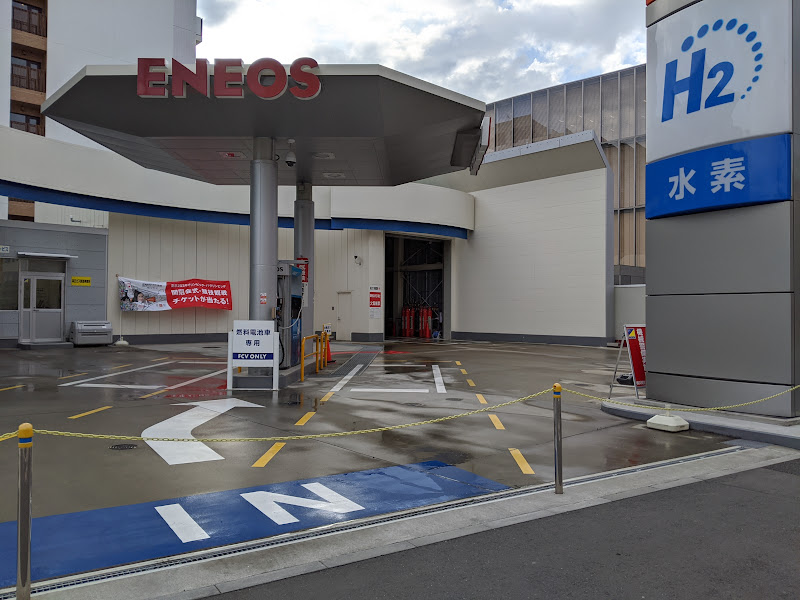
This raises a second issue: Toyota has been betting on hydrogen as the fuel of the future. Its Toyota Mirai runs on compressed hydrogen (H2), which is converted into electricity in an on-board fuel cell. This gives it a range of about 500 km between refuelling.

If Toyota were to sell BEVs with ranges of 300-450 km, this would undermine the rationale for hydrogen cars which need a completely new infrastructure for refuelling. Each H2 station costs millions of dollars and the fuel is expensive.

The most economical way of making hydrogen is from natural gas or coal, which releases greenhouse gases. Though one could make hydrogen through electrolysis (splitting water into hydrogen and oxygen using electricity), because of inefficiencies inherent in this process, this would actually consume about three times more renewable electricity than covering the same distance by charging/discharging a battery. This is why hydrogen will ultimately remain an automotive dead end.

What hydrogen technology basically gives Toyota is a political fig leaf: They can claim to have a path into a carbon-free future that does not rely on batteries (like Tesla and others). Using that fig leaf they think they can keep selling cars that burn gasoline, in California and elsewhere. Perhaps they can hold off moving beyond hybrids for years and years to come. If they can keep selling what they’ve got they may make healthy profits in the short term, but for the sake of the planet I hope this plan won’t work.

I’ve seen this movie before. In the 1990s Sony launched its MiniDisc (MD) player as a replacement for analog audio tapes and recordable alternative to digital Compact Discs (CDs). Then, in the late 1990s MP3 and flash memory came along: smaller, cheaper, more simple. The whole strategy fell apart. Sony could have accepted that MP3 was a superior solution, but that would have then put them on a level with every other audio consumer product maker. Their patents on MD would have become worthless. So they struggled on with trying to promote MD until they eventually had to kill it. From the inventor of the iconic Sony Walkman that had created a whole new market and sold the brand name to billions of consumers, Sony turned into a company that had lost its way. It let newcomers such as Apple with its iPod (which soon morphed into the iPhone) take over the market and consumer mindshare. The rest is history.

So if you’re listening, Toyota: Please build a car as spacious, practical and reliable as the Prius, but without a hybrid drivetrain that still releases CO2 with every km driven. Make it a no compromise battery electric vehicle. Support vehicle-to-grid technology, in which parked cars have an important role to play for stabilizing the electrical grid. Instead of working with fossil fuel companies to turn fossil fuel into hydrogen for thousands of yet to be built H2 filling stations, support expanding renewable power production from solar, offshore and onshore wind, geothermal and large scale storage, which is what we will need for a carbon-neutral future.

Meanwhile, when the time comes to replace my 12 year old car I will look at all the battery electric hatchbacks on the market then. If there is no Toyota amongst them then my next car will not be a Toyota. It’s as simple as that.

Huawei Nexus 6P Battery Upgrade

I’ve had my Huawei Nexus 6P for about two years now. The combination of a great camera, an excellent screen, good performance and decent battery life has made this my best smartphone ever.

However, a couple of months ago something happened as the battery capacity appeared to have collapsed dramatically. Sometimes the phone would shut down only 5 hours after I had disconnected it from the AC charger when I left home, starting off supposedly fully charged! I had to always carry a USB battery and cable with me to not risk losing the use of my phone in the middle of the day.

Attempts to recalibrate the capacity indicator helped only insofar as the phone would shut down at 14% charge instead of say 55% charge, so there was slightly more warning, but the number of hours was still too short. This actually seems to be a common problem with the Nexus 6P, which otherwise is still a great phone.

It’s not uncommon for Li-ion batteries to significantly lose capacity after about about three years, but if it happens after less than two years as in my case, that’s not very good. Fortunately, replacement batteries are available and any competent phone repair shop will be happy to do the necessary surgery to replace a battery that is on its way out. Unfortunately the days when you could simply pop open the phone case without any tools and swap the battery yourself are long gone. This is a trend started by Apple and almost every other phone maker has since followed suit. I think it’s meant to get people to buy a new phone sooner, which is good for Apple and its competitors, but bad for consumers and for the planet.

There are Youtube videos that will show you how you how to open the Nexus 6P case and disassemble the phone to swap the battery. This involves the use of a hairdryer or heat gun to soften the glue that holds it all together as well as a plastic card and a small screw driver. As I did not feel adventurous enough to attempt this myself, I contacted several phone repair shops here in Tokyo. Repair King Japan replied. Though they they didn’t have the Nexus 6P battery in stock they were happy to order one for me. Once they got it, I dropped the phone off and two hours later I could have it back with a new battery. So far it’s looking good: It’s been 40 hours since the last full charge (with battery saver mode inactive) and it’s still showing 64% with about 3 days of power left 🙂

UPDATE: At 72 hours, it still had 23% charge left. At that point I connected it to a charger.

Hopefully with the new battery my Nexus 6P will be a great phone again for a few more years!

Olympic Hydrogen Hype

Today’s Japan Times reports that the Organizing Committee of the 2020 Tokyo Olympics is considering the use of hydrogen torches to light the Olympic flame (“Olympic panel mulls high-tech hydrogen torch, pares soccer venues” — JT, 2017-02-27):

“An important theme of the Olympics is how to promote environmental sustainability. We will talk to experts and see how realistic it is in terms of technological development,” a committee member said.

One official said there are still safety and cost concerns, and asserted that there also was a need for a lightweight torch that can be easily carried.

In March 2016, the Tokyo Metropolitan Government announced a project to have the 6,000-unit athletes’ village for the games run entirely on hydrogen power.

The Japanese government is one of the most active promoters worldwide of a so called “hydrogen economy”. It sees the 2020 Olympics as an opportunity to showcase Japan’s lead on hydrogen. Other projects are the construction of a nationwide network of hydrogen filling stations for hydrogen fuel cell vehicles (HFCV) such as the Toyota Mirai, research into shipping liquefied hydrogen from overseas using special tankers and production of hydrogen from lignite (brown coal) in Australia for export to Japan.

Let’s start with the most obvious problem in the article, the hydrogen fueled torch: The usual Olympic torches use LPG (propane/butane) as a fuel, a gas mixture that can be stored as a liquid under moderate pressure at normal outdoor temperatures. This makes it easy to carry a significant amount of fuel in a light weight container. Hydrogen by contrast does not liquefy unless chilled to about -252 C. Hydrogen powered vehicles run on compressed hydrogen instead, at pressures of up to 700 bar, equivalent to half the weight of a car on each cm2 of tank surface. As you can imagine that kind of pressure calls for some fairly sturdy containers. An even bigger problem is that pure hydrogen flames are invisible because they radiate energy not as light but as UV. You could feel the heat, but you couldn’t directly see if the flame is burning or not, which makes it quite hazardous. Talk about playing with fire…

The comment about running the Olympic village on “hydrogen power” is quite misleading. It’s like saying they would run the Olympic village on battery power, without explaining where the energy to charge those batteries came from. Like batteries, hydrogen is not a primary energy source, it’s an energy carrier. Since elementary hydrogen does not exist in significant quantities on earth, it has to be produced using another energy source such as natural gas or electricity generated using coal, nuclear, wind or solar.

Though it’s possible to produce hydrogen from carbon-free energy sources such as solar electricity (splitting water through electrolysis) and then produce electricity from hydrogen again, this process is far less efficient than either consuming renewable electricity directly or via batteries. When you convert electric energy to chemical energy in hydrogen and back to electricity, about 3/4 of the energy is lost in the process. This is incredibly wasteful and far from green.

With its sponsorship of hydrogen, the Japanese government is trying to create business opportunities for industrial companies such as Kawasaki Heavy Industries, a Japanese shipbuilder (see “Kawasaki Heavy fighting for place in ‘hydrogen economy'” — Nikkei Asian Review, 2015-09-03) and for its oil and gas importers, as almost all hydrogen is currently made from imported liquefied natural gas (LNG). In the longer term, the government still has a vision of nuclear power (fission or fusion) producing the electricity needed to make hydrogen without carbon emissions. Thus the ‘hydrogen economy’ is meant to keep oil companies and electricity monopolies like TEPCO in business. The “hydrogen economy” is coal, oil and nuclear hidden under a coat of green paint.

These plans completely disregard the rapid progress being made in battery technologies which have already enabled electric cars with ranges of hundreds of km at lower costs than HFCVs and without the need for expensive new infrastructure.

Hydrogen, especially when it’s produced with carbon-intensive coal or dangerous nuclear, is not the future. Japan would be much better served by investing into a mix of wind, solar, geothermal and wave power, combined with battery storage and other technologies for matching up variable supply and demand.

See also:
Hydrogen Fuel Cell Cars Are Not The Future (2016-12-05)